


OpenAI has updated ChatGPT with changes to its GPT-5.6 Sol model and broader access to GPT-5.6 Luna for free users. The update reaches paid users first and extends unlimited text chats to free users.
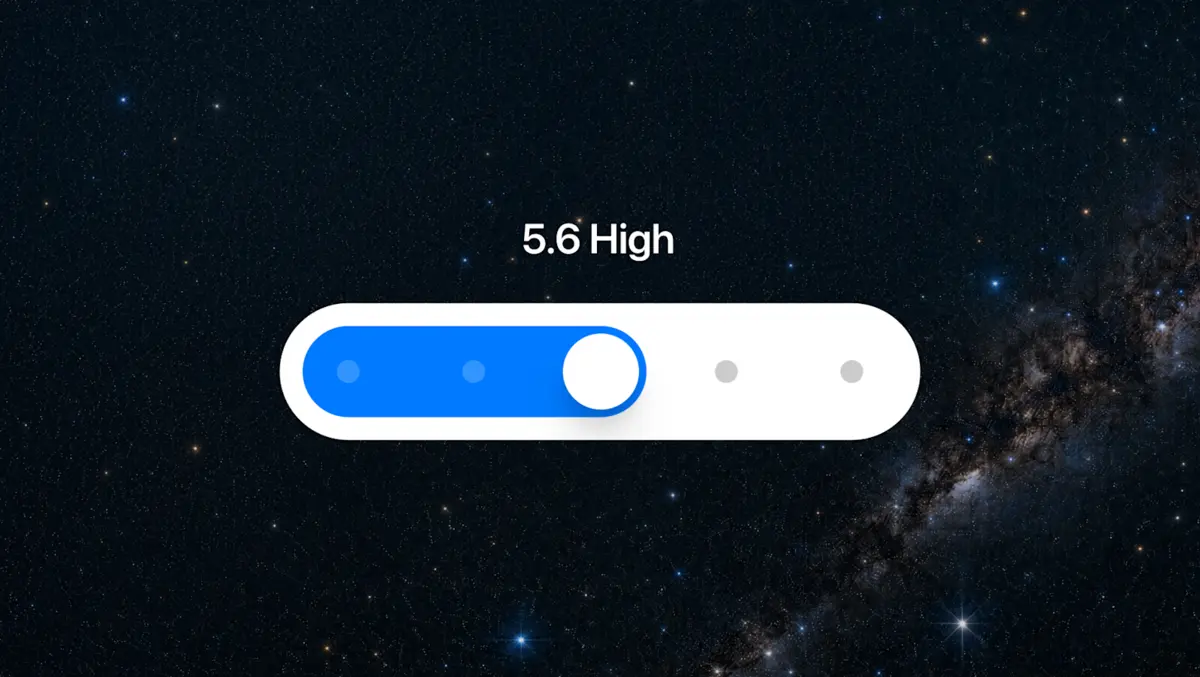
For Plus and Pro subscribers, GPT-5.6 Sol in ChatGPT now delivers more reliable factual answers and more focused responses. OpenAI has also added a slider on web, mobile, and desktop that lets users choose how much processing time the chatbot gives a reply.
Free users are being moved to GPT-5.6 Luna as the default model. They will also get unlimited text chats, while a new Think button will offer a higher-reasoning mode for harder questions.
The update reflects OpenAI's effort to simplify how ChatGPT behaves across quick exchanges and more involved tasks. Rather than separating fast answers from deeper reasoning with noticeably different styles, paid users will now see a more consistent tone when moving between lighter and heavier modes of use.
Model changes
OpenAI said GPT-5.6 Sol has been adjusted to produce tighter answers, reduce unnecessary formatting, and avoid adding extra detail when it is not helpful. The model is also intended to be less likely to agree uncritically with a user when a correction would be more useful.
To illustrate the change, OpenAI cited a travel-weather example in which the updated model answered a cycling question more directly than an earlier version. In that example, the newer system led with a clear answer on rain risk before adding only the most relevant detail on wind and coastal conditions.
That reflects a broader design choice in consumer AI products, as providers try to make chatbots less verbose and more predictable in everyday use. For products used at scale, small shifts in clarity and style can shape whether people trust a tool for routine planning, research, and advice.
OpenAI said about 1 billion people use ChatGPT each week for tasks ranging from quick questions and web searches to writing, planning, and complex decisions. It is therefore trying to tune one consumer interface for both casual use and more demanding work.
Factual accuracy
A central part of the update is factual reliability. OpenAI said the revised GPT-5.6 Sol is designed to make fewer mistakes in replies that depend on dates, figures, sources, rules, or assumptions, partly by making better use of the sources it finds when answering a query.
In an internal evaluation covering financial, medical, and legal prompts that required factual detail, responses containing at least one factual error were about 62% less common with GPT-5.6 Luna and 68% less common with GPT-5.6 Sol than with GPT-5.5 Instant, according to the company.
Those figures are based on OpenAI's own testing rather than an independent benchmark, but they point to the competitive pressure on AI providers to show measurable reductions in hallucinations. Accuracy remains a major issue for chatbots used in settings where people may rely on them for practical or sensitive guidance.
Free access
The expansion for free users marks a notable change in how OpenAI is distributing its newer models. By making GPT-5.6 Luna the default and removing the text chat rate limit, it is widening access beyond its paying subscriber base while still keeping limits on file uploads, images, and other tools.
The Think button gives free users a way to request more reasoning time on tougher questions without switching products. That mirrors a wider market pattern in which AI companies offer a basic fast mode and an optional slower mode for tasks such as planning, writing, coding, and analysis.
OpenAI said the current version of GPT-5.6 Sol is limited to the Chat experience in ChatGPT. The version of GPT-5.6 Sol used for Work and Codex is not changing as part of this rollout.
Safety measures
OpenAI also outlined additional safeguards for users it believes are under 18. It said the model has been trained to avoid romantic roleplay, age-restricted challenges, and presenting itself as a substitute for real-world relationships.
It added that age-appropriate boundaries have been applied to sexual content, eating disorders and body-image risks, age-restricted goods, dangerous activities, and graphic violence. The model also encourages connection with trusted people when a teenager may need support, according to OpenAI.
Those safeguards have been reinforced with system-level protections and new evaluations of how the models perform for under-18 users, the company said. The focus on younger users comes as AI firms face closer scrutiny over how conversational systems handle vulnerability, persuasion, and emotional dependency.
For OpenAI, the release combines two aims that can be difficult to balance in consumer AI: broadening access while tightening control over quality and safety. Limits will still apply to tools beyond text chat, even as it opens unlimited text conversations to a wider group of users.