Containerisation stories
By shifting orchestration to Google Cloud's managed service, the payments firm cut monthly data platform costs by about 30% and improved reliability.
The experiment showed AI crews can coordinate across files and roles, but still stumble on timing, continuity and safety filters.
Windows fleets could be left blind to malware once attackers gain admin rights, as Bitdefender says bind links can fool endpoint security tools.
UK and Ireland partners will gain wider access to Docker's container platform as Exclusive Networks expands its cloud-native software portfolio.
The tie-up aims to bring quantum processors into supercomputing workflows, with France, the UK and Germany as the first target markets.
Unsanctioned AI tools and siloed IT systems are widening risk for hospitals, as 88% say on-site infrastructure is not ready.
Cloud providers facing the end of VMware's CSP programme in 2027 can now tap migration tools and new pricing to protect margins.
Research teams can now run HPC and AI workloads without rebuilding storage and cloud stacks, as CIQ adds support for major file systems.
Research centres can now keep existing Lustre and GPFS data in place as Fuzzball 4.0 adds Azure support, caching and a registry.
Most financial institutions now see unsanctioned AI use as a business risk, with 86% of IT executives warning of weak oversight.
The new features promise to curb Kubernetes cloud spending by spotting stranded capacity that blocks cluster consolidation and auto-scaling.
The update lets AI and HPC teams move workloads across five clouds and on-premises, cutting duplication and simplifying GPU access.
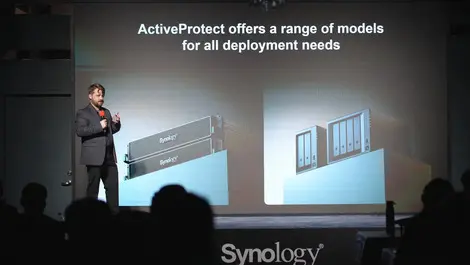
Businesses will soon get on-site AI workflows and broader backup coverage as Synology's latest software updates target compliance and ransomware risk.
The update aims to curb bad answers and compliance risk for banks and other regulated users as enterprise AI rolls out more widely.
The Polish lender expects a 60% drop in virtualisation costs as it shifts hundreds of critical workloads onto Red Hat OpenShift and Hitachi Vantara.
The tie-up gives organisations real-time controls against prompt injection and data leakage as enterprise AI moves into live deployment.
Older servers may be unprotected for years because some backup providers no longer fully support them, risking recovery failures and audit breaches.
As Kubernetes deployments spread, operators are under pressure to cut incident times and pin down faults across complex cloud estates.
Quantum-resistant encryption and AI-driven automation are coming to Red Hat Enterprise Linux, as customers face tighter security and less manual upkeep.
The university has cut its infrastructure footprint by 52 per cent after moving core learning, portal and ERP systems to Nutanix Cloud Platform.