

Xanadu & HyperLight cut optical switch loss to 7 mdB
Fri, 13th Nov 2026 (Today)
Xanadu and HyperLight said they had reduced optical switch insertion loss to 7 millidecibels, improving on their earlier 20 millidecibel benchmark.
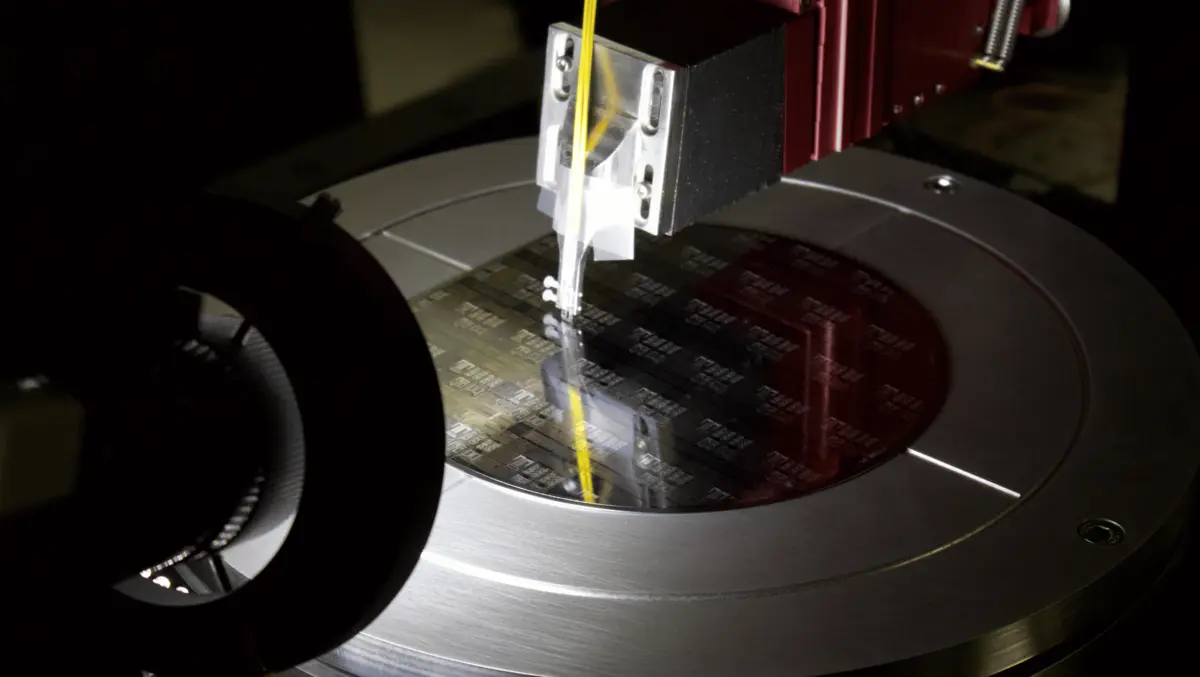
The result was achieved using thin-film lithium niobate technology on HyperLight's Chiplet platform in a high-volume wafer manufacturing line. The companies said the work demonstrated yield and repeatability, addressing a hardware issue that has limited efforts to scale photonic quantum computers.
Optical switches route photons carrying quantum information through photonic systems. In quantum computing, loss matters because signals cannot be conventionally amplified without affecting the quantum state. That means each reduction in insertion loss can help preserve fidelity and reduce the number of lost qubits.
Xanadu is a Canadian company focused on photonic quantum computing and has been working on fault-tolerant systems based on light. HyperLight develops photonics technology based on thin-film lithium niobate, a material used in optical devices that require fast switching and low loss.
The latest figure marks a near-threefold reduction from the previously reported 20 millidecibel level. The companies also said it was lower than the most recent published result from a competing approach, although they did not provide an independent comparison.
Scaling challenge
Reducing switch loss is a central issue in photonic quantum computing because losses can accumulate as systems grow. Higher losses can force designers to use more laser power or add hardware to compensate, increasing complexity and cost.
The companies said lower insertion loss could improve manufacturing economics and reduce the physical footprint of future systems. Xanadu also linked the development to its broader commercial plans for utility-scale quantum computing, which depend on reducing overheads across the hardware stack.
A key part of the announcement was the manufacturing setting for the result. Demonstrating the benchmark on a high-volume wafer line, rather than only in a lab, suggests the companies are trying to show the design can be repeated under production conditions.
Dr Christian Weedbrook, Founder and Chief Executive Officer of Xanadu, described the result as a step towards production. "This notable switch insertion loss milestone indicates that Xanadu's quantum-compatible switches are ready to ramp to production, bringing scalable quantum hardware and utility-scale quantum computing (USQC) one step closer to reality," said Weedbrook.
He also linked low loss to the technology's commercial viability. "For Xanadu, minimizing optical loss is one of the most critical factors in making fault-tolerant photonic quantum computing commercially viable, and innovative partners like HyperLight are key to our go-to-market strategy," said Weedbrook.
Production focus
Xanadu said the lower loss level should reduce overheads for larger systems. "Achieving 7 mdB switch loss, nearly 3x lower than our previous benchmark set just over a year ago and 10x lower than our closest competitor's most recent published result, is a major hardware milestone that enhances performance and reduces overhead for utility-scale systems," said Weedbrook.
He added that the company sees broader implications for production and system design. "We expect that this advancement will translate into improved manufacturing economics, a reduced footprint, and direct progress along our commercial roadmap. Beyond quantum computing, we believe our ultra-low-loss photonic quantum technology could offer value across the broader data center ecosystem as data centers become faster and more energy intensive," said Weedbrook.
For HyperLight, the announcement also serves as a reference point for the reach of its chip platform across optical markets. Thin-film lithium niobate has drawn interest in telecoms, data communications and emerging computing architectures because of its optical properties and suitability for integrated photonics.
Mian Zhang, Chief Executive Officer of HyperLight, said the work extended an existing partnership between the two companies. "Our longstanding partnership with Xanadu continues to demonstrate the power and versatility of HyperLight's TFLN Chiplet platform," said Zhang.
He said the same manufacturing base used in other sectors had now produced the latest quantum result. "The same platform that powers high-volume AI data centers and telecom networks has now delivered a record-setting 7 mdB switch loss for quantum computing with Xanadu, a testament to our platform's ability to meet the most exacting demands," said Zhang.