

University Health Network advances AI-driven surgical care
Tue, 31st Mar 2026
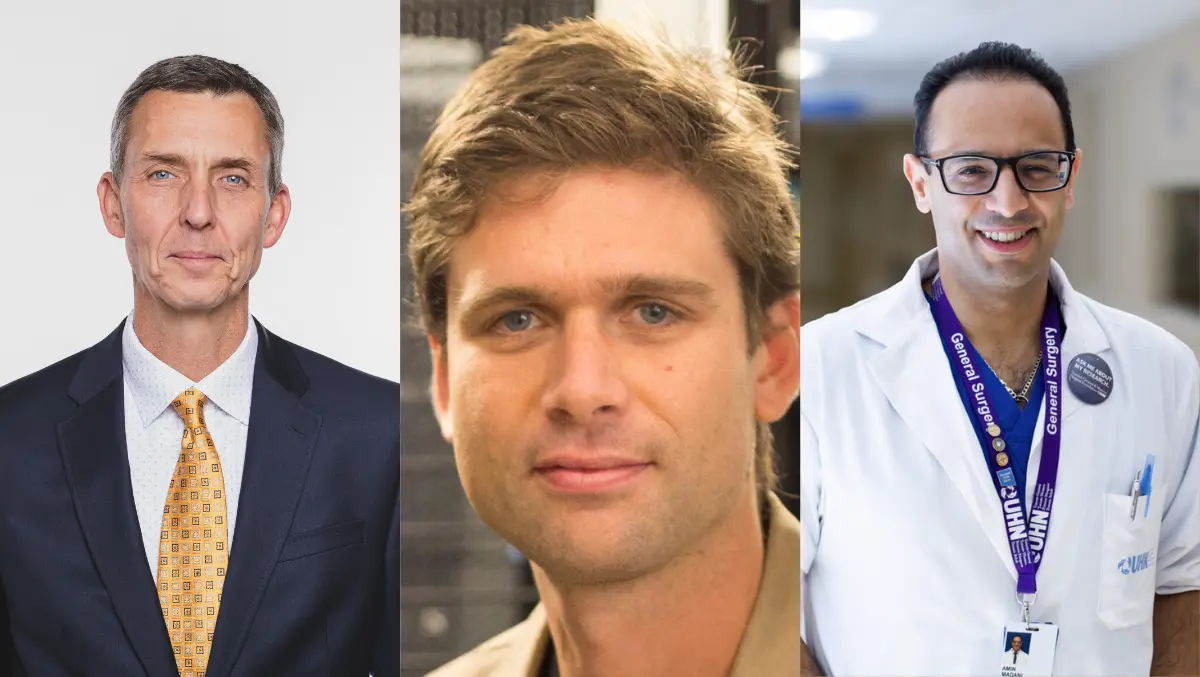
Toronto's University Health Network (UHN) has announced its new surgery tower at Toronto Western Hospital, and Dr Tom Forbes, Surgeon-in-Chief, Sprott Department of Surgery at the network, says the design will be life-changing, with the implementation of artificial intelligence and compact analysis in surgical design.
The CAD $1 billion tower, expected to be completed in 2028, will help alleviate the surgical backlog in the medical system left over from the COVID-19 pandemic.
The facility will include 20 new operating rooms with adjacent research laboratories, enabling experimental therapies, including viral vector-based treatments delivered directly during surgery.
Forbes said cancer wing facilities will feature advanced imaging right in the room, and MR suites and research labs right next door. Operating room layouts are just the beginning, citing examples of deep brain stimulation, electronic implants inserted in the brain to control the tremors and help patients with Parkinson's disease. The UHN performed the first Neuralink implant surgery outside the United States in September of last year.
At a UHN panel discussion in partnership with Bank of Montreal on March 30, Forbes added that artificial intelligence is also making its way into the network.
"When I think of artificial intelligence, I think of the data-driven predictive machine algorithms taking data sets that our simple logistic regression tools are not able to analyse. We can with these [AI] algorithms have an output that has direct impact on patient care," said Forbes, adding that patient triage systems and using data to provide warnings in the operating room.
In the early COVID-19 Pandemic, Dr Amin Madani, Endocrine Surgeon and Director, Surgical AI Research Academy, UHN, developed an AI algorithm to replicate the brain and cognitive behaviour of experienced surgeons.
"When you think of a surgeon having really good skills, you think about them having good hands, 'the hands of the surgeon'. It actually has nothing to do with their hands. It's actually everything to do with their brain. You know, a good surgeon is someone who could have who exercises good judgement, makes good decisions, identified patterns on the in the surgical field, and knows what to do when the time is right," he said during the panel discussion.
The system, currently being tested on gallbladder surgeries at UHN, uses computer vision to provide surgeons with real-time navigation in the operating room. For example, colour-coded systems project 'go' and 'no-go' areas onto live video monitors. Green areas are likely clear to operate, while red areas may pose a danger.
"Imagine that a software that can think like an expert surgeon, and it's not just one expert surgeon. You can actually get the AI algorithm to take the thoughts and behaviours of many experts around the world and package it up into this little piece of software. "
Madani hopes this software will "democratise" institutions that lack large surgical teams or require additional medical opinions. The intended outcome is broader access to high-quality surgical care, particularly in regions without specialist expertise.
"You can democratise surgical care, you can get it to places where they don't have access to that expertise," said Madani.
Artificial intelligence is also being applied to one of the most persistent bottlenecks in healthcare: matching patients to clinical trials.
Dr Ben Haibe-Kains, Scientific Director, Cancer Digital Intelligence, and Executive AI Scientific Director at UHN, is part of a patent-matching-to-therapy program that uses genomics and patient data. The program in development is named PMATCH, an open-source software platform that uses powerful machine learning to search complex clinical and genomic eligibility criteria and the data generated by each patient during their cancer journey. This includes blood tests, surgery, and family history.
The program, which launched in the 2023-2024 fiscal year, is also working out some kinks.
"Believe it or not, there is actually a legal challenge here. How do we share trials across institutions? Because what we want is for a patient anywhere in Canada, whether you're in a big city centre or in a rural area has access to the best trials run in Canada and potentially the world. I think this system is working when coordinating with other countries. We really give patients more opportunities, but sharing those trial protocols is actually challenging, they are a part of agreements that are very local."
Despite rapid progress, clinicians emphasised that implementation, governance and trust remain significant barriers. Bias in training data, lack of standardised evaluation frameworks and low adoption rates among clinicians continue to limit deployment.
Haibe-Kains highlighted the need for AI systems to actively identify inequities in care.
"All the data we have are biased by definition, and very few researchers actually dive into that problem of, is my model fair? Is my model equitable?" said Haibe-Kains.
When the Surgical Tower at Toronto Western Hospital opens at the end of 2028, AI will be much more advanced, so Forbes said doctors need to embrace the tools at their disposal to keep medicine advancing.
"We often say that surgeons aren't going to be replaced by robots, at least in the length of maybe our careers. Maybe they will sometime. But it's the old adage of surgeon using AI using robots is going to be replaced by is going to replace those who aren't using those tools."