

This Calgary-founded app turns brainwaves into actions
Wed, 17th Jun 2026 (Today)
Dion Kelly was a PhD student in the University of Calgary's paediatric brain-computer interface research lab when she got a phone call that changed how she understood her work.
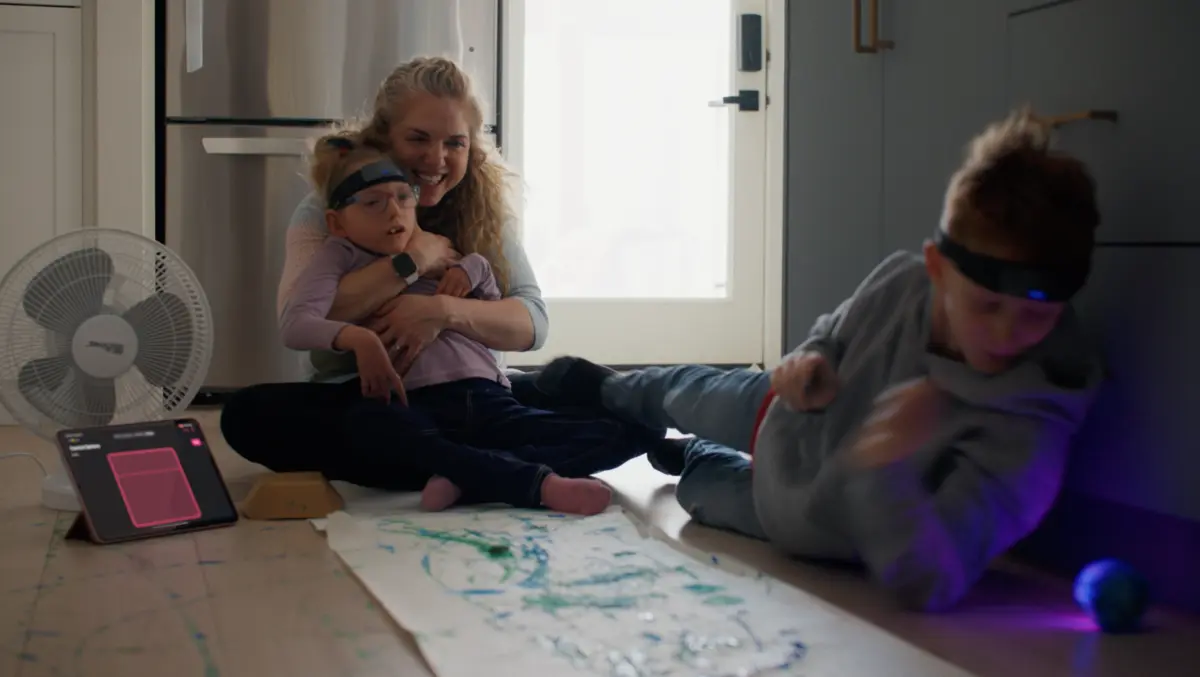
On the other end of the line was a mother in tears over a piece of technology her daughter used every day to turn thoughts into physical action. A research study at Alberta Children's Hospital was ending, and with it, access to the tech that helped her daughter Claire, who has cerebral palsy, control devices with her brainwaves.
"I don't know how she's going to interact without it," Kelly recalled the mother saying. "We can't give this back."
Kelly had heard encouraging data about the future of this life-changing technology for people with cerebral palsy. But it was that phone call that made her understand what she was actually building.
Research began around 2016, under Kelly's co-founder and PhD supervisor, Adam Kirton, a paediatric neurologist at the hospital and professor at the University of Calgary. In 2022, that unique dataset and the robustness it demanded were used at the core of Possibility Neurotechnologies, the company she founded with Kirton.
Prior to this, Kelly moved to Alberta for the mountains, spent a year in Canmore, and only returned to school after falling into a master's program at the University of Calgary that happened to sit next to one of the only paediatric brain-computer interface research labs in the world. The rest followed.
She chose to build the company in Calgary rather than return to Toronto, where she grew up. "There's just a lot of competition there," she said. "I felt like this was the best place to grow the company."
The algorithms at the core of Think2Switch, the brain-computer interface app developed by Possibility Neurotechnologies, were trained on a dataset no one else has, years of paediatric brain-computer interface research conducted at Alberta Children's Hospital.
The app, which can be accessed through Apple's app store, has a three-step process: connect the application to a compatible headset, calibrate it to learn what the user's personal brain signals mean, and train on the individual's neural patterns to distinguish intentional thought from background noise.
Think2Switch works with consumer-grade EEG headsets - specifically those made by Muse, a Canadian company whose devices are typically marketed for meditation and sleep tracking.
From there, the app acts as a translator. It identifies specific signal patterns, decodes intent, and triggers an output. Those outputs fall into three categories: making in-app selections (useful for basic communication and decision-making), emulating a Bluetooth keyboard to control external devices such as computers or games, and operating smart home devices through Apple's Home app.
"It decodes the intent from those brain signals, it looks for specific patterns, and then it does whatever you've told it to do," Kelly explained.
What makes Possibility's approach technically distinct is where it was developed and for whom. Brain-computer interface research has historically focused on adults with acquired brain injuries, people who have lost movement but whose bodies are otherwise still. The conditions for signal capture are, relatively speaking, clean.
The effects of cerebral palsy are the opposite. Uncontrolled movements introduce constant noise into EEG readings. Kelly and her team built around it.
"We've developed it with the assumption that there will be a ton of signal interference," Kelly said.
Early adopters have emerged in six countries, with the largest concentrations in Canada, Australia, and the United States. Kelly confirmed that the app has been downloaded in 17 countries. Think2Switch is also compatible with Emotiv headsets, a more complex option aimed at research groups.
A new hardware interface is in development, expected by year's end, a device that would let Think2Switch connect directly to switch-adapted toys, communication devices, and potentially power wheelchairs, opening a new category of control for people with complex physical needs.