

Strengthening Indigenous sovereignty, claiming data back
Thu, 31st Jul 2025
When British Columbia-based tech company Animikii launched its e-book #DataBack: Asserting & Supporting Indigenous Data Sovereignty in 2023, it published that data sovereignty is essential to Indigenous sovereignty. Mainly, the historic and continual use of Indigenous data (songs, art, language, traditions, and cultural teaching, to name a few).
Jeff Ward, Founder and CEO of Animikii, says that as concerns of generative AI ethics come into the conversation, this is not a new topic for Indigenous peoples.
"We've been dealing with this for a long time, where people are coming in and taking our land, taking our culture for profit, for colonial capitalism," says Ward. Now, with artists and musicians suing AI companies for training models on copyrighted data, Ward says, "the world is understanding what it's like for their data to be stolen."
#Databack speaks to the idea that there is no universal path to technological development. For example, it describes how recording information on paper is a form of bureaucracy - using a cheap and disposable medium to control information over vast spaces of land. "In other words, we're using a Eurocentric form of data, to talk about Indigenous data," Animikii states in the book.
Indigenous communities have kept records through pictograms, petroglyphs, and various forms of artwork for many generations. #Databack explains how, although this form of data-keeping is different to the methods of European settlers, they are not methods of technical inferiority, rather, matters of each community's needs and its relation to the land.
"Due to the destructive nature of colonization, Indigenous data are sometimes fractured, incomplete, or indecipherable to the outside world and sometimes even within our own communities. That doesn't mean that they are gone or have little value. If anything, settlers have always profited by extracting and commodifying Indigenous data. Even today they have the audacity to demand we buy our data back (with the currency they force us to work for)." - Excerpt from #Databack: Asserting & Supporting Indigenous Data Sovereignty.
According to Ward, his work at Animikii is to make sure Indigenous peoples have control over more of their data. He says this data can be categorised into multiple layers of Indigenous ownership: first, as an individual's song or art. Then, the collective data at a community level. This can exist as art styles or community teachings.
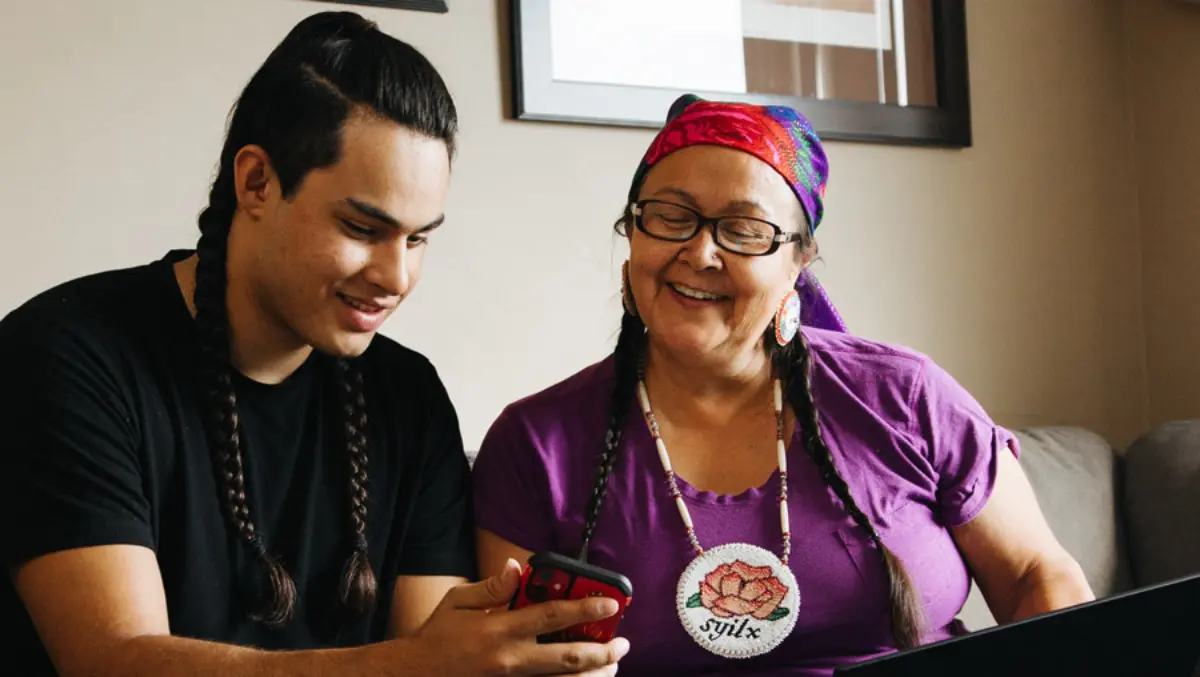
"My grandmother's beadwork, for example, things that she would have made. Those shapes come from teachings, those shapes in the patterns of the beadwork come from community knowledge," says Ward.
Animikii's flagship program, Niiwin, is a cloud-based data design tool that helps Indigenous businesses build tech from vision planning and collaborative decision-making to pathfinding. All while keeping their data.
"[Niiwin] lets you design data structures, manage that data, manage that data governance, and then host it anywhere so it fully supports the OCAP principles; ownership, control, access, possession," says Ward. "It's the only data platform that we know is being built from the ground up with Indigenous values and Indigenous data sovereignty principles."
Ward says the program is designed to develop content through symbolic AI versus generated content. "It kind of has that full magic baked into it, which is, you know, otherwise, a statistical model underneath."
Animikii plans to launch a no-code Software-as-a-Service datastore in the fall, although the software has been used for community projects to date. This includes a partnership with Survivors' Secretariat, a Six-Nations-based organisation supporting the investigation into missing children and unmarked burials within Canada.
"We got data back from provincial and federal, and historical databases - now it's all into one platform," says Ward. Animikii's Impact Report for 2024 stated that "these technologies must not make Survivors, their families and communities further dependent on any outside forces. They must promote Indigenous sovereignty, not erode it."
OneFeather CEO Lawrence Lewis says his data sovereignty ambitions come from the wise words of his grandfather. "He often told me, 'If you're not getting the service you need as an Indigenous person, make it yourself!' Those words stuck with me."
His company, an Indigenous technology firm started in 2014, is building back data sovereignty through voting services for national elections, and online status card services, to name a few.
Lewis, working in Indigenous governance for over 30 years, noticed issues with maintaining up-to-date records of Nation members.
"The voting process itself was often overwhelming, largely due to the lack of efficient systems to manage and update information. It involved a great deal of manual work, and that inefficiency created real barriers," says Lewis. "I saw a wide range of unmet needs within Indigenous communities. My goal was, and continues to be, to remove the barriers that stand between our people and their rights and entitlements: barriers like geography, time, cost, health, and politics."
Through this solution, the system uses verification systems to make sure there are no duplicate votes while keeping a digital trail in OneFeather's secure cloud. "Digital ballots are encrypted, securely stored, and inaccessible until the event ends - at which point they are then tallied electronically," says Lewis.
To date, 150,000 votes have been cast using OneFeather's solutions. Additionally, data accessibility is growing, with Lewis reporting this growth compared to 69,502 votes in 2024.
"In the AI ecosystem, data stores are very important, and so we thought we might as well offer anyone as a data store that comes from Indigenous values and Indigenous frameworks that really the whole world will benefit from, especially other communities that have been marginalized through technology," says Ward.
Lewis says when Indigenous peoples take AI governance into their own hands, it becomes a form of digital decolonisation. Adding that Indigenous communities should "lead from a place of knowledge, protection, kindness and innovation. You don't need to have all the answers and you'll make mistakes along the way. But if you're building from a place that is for the goodness of your communities, you'll get there."