

Spacecoin launches SpaceRouter for AI agents online
Tue, 31st Mar 2026
Spacecoin has launched SpaceRouter, a residential proxy platform for AI agents designed to let automated systems access websites through residential internet connections.
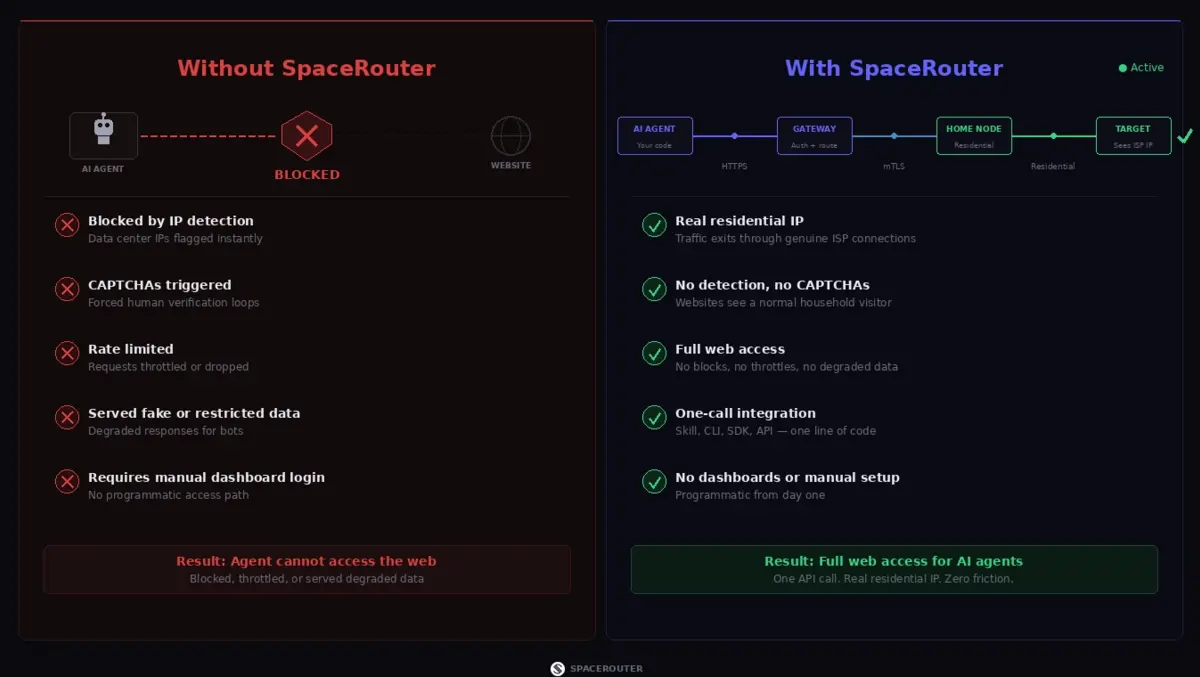
The service routes AI-generated traffic through residential IP addresses supplied by a network of home internet connections rather than data-centre infrastructure. Spacecoin says this is intended to reduce the chances of websites blocking agent traffic with anti-bot measures such as CAPTCHAs, IP bans and rate limits.
The launch expands Spacecoin beyond satellite connectivity into internet access and automation software. The company has presented it as the next stage in a broader effort to build services on top of its low-Earth orbit satellite network, which has already been used in connectivity pilots in Africa and Asia.
Agent Access
Businesses are trying to deploy AI agents for tasks such as web browsing, data gathering, workflow automation and booking services. But many websites are set up to detect non-human traffic, especially when requests come from data-centre IP addresses commonly used by cloud services and automated tools.
SpaceRouter is aimed at that constraint. Instead of relying on traditional proxy infrastructure managed through manual dashboards, developers can connect agents to the service through command-line tools, software development kits and application programming interfaces, according to the company.
The platform supports HTTP and SOCKS5 protocols and includes geographic routing, allowing users to send traffic through specific countries. Developers using Python, JavaScript and other agent frameworks can integrate the service through standard proxy connections, Spacecoin said.
How It Works
SpaceRouter uses a three-part model, according to Spacecoin. A proxy gateway serves as the entry point for AI agents, a coordination API selects a residential connection based on factors such as location and uptime, and home nodes provide the final outbound traffic through residential internet links.
The structure reflects a broader shift in AI infrastructure, as developers seek tools that help autonomous systems interact with the public web without repeated disruption. The challenge has become more acute as AI agents move from experimental use into production settings where continuity of access matters.
Spacecoin also says the network is decentralised and linked to staking and slashing mechanisms tied to its $SPACE token. It argues that this creates incentives for node operators to maintain service quality across a distributed network, though it did not disclose how many active home nodes or developers are already using the platform.
Broader Push
The launch also highlights how infrastructure groups in digital connectivity are trying to broaden their addressable markets. Spacecoin has primarily presented itself as a satellite-based internet provider focused on underserved and remote regions, but SpaceRouter moves it into a different segment: software tools for AI developers and automation teams.
Its broader strategy is to link network access in orbit with application-layer services on the ground. By combining satellite infrastructure with proxy routing for AI agents, the company is trying to build a stack that supports both physical internet access and machine-led use of online services.
That positioning comes as interest grows in what some technology companies call the "agentic" internet, a term for online activity increasingly carried out by software agents rather than direct human interaction. For companies building those systems, website access remains a practical obstacle because many online platforms still treat automated traffic as suspicious by default.
Spacecoin says SpaceRouter was built for those autonomous workflows and does not require manual configuration through conventional user dashboards.