

New Vancouver conference aims to unite Indigenous tech
Tue, 13th Jan 2026
Canada's Indigenous technology ecosystem has long existed in fragments, with founders spread across provinces, employees isolated inside large organisations, and investments that rarely intersected with Indigenous-led innovation. This January, a new conference in Vancouver aims to change that.
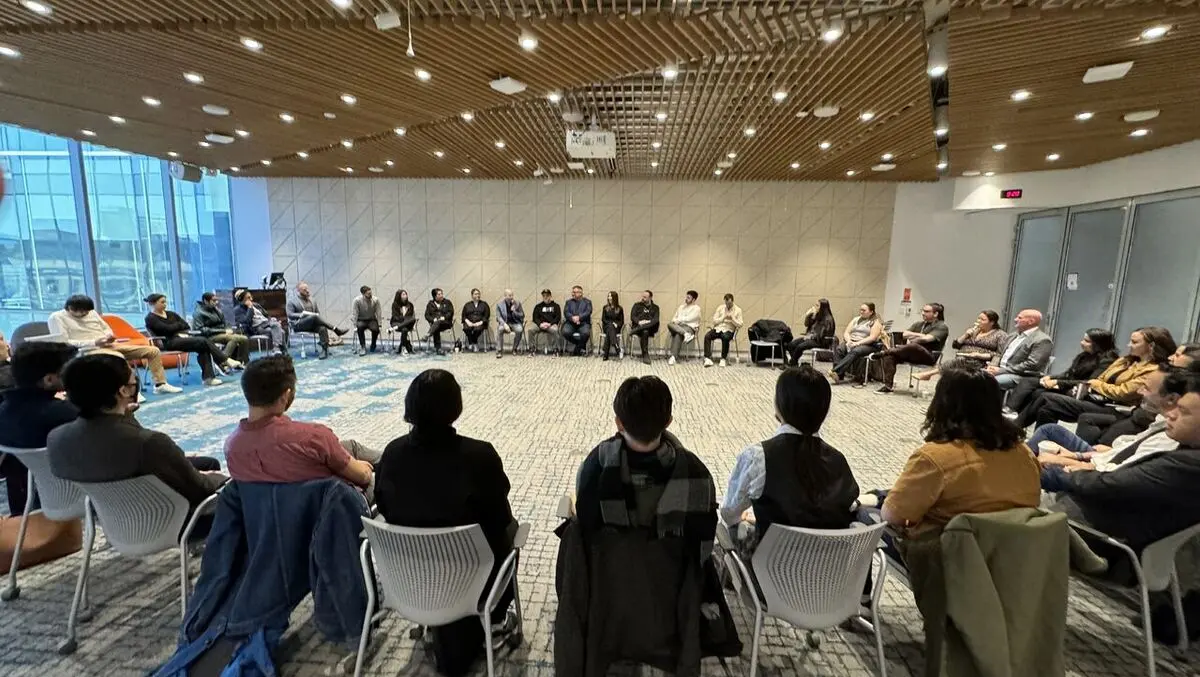
The inaugural Indigenous Tech Conference, hosted by Indigenous Tech Circle (ITC), will bring together founders, investors and allies from across the country for what organisers describe as the largest gathering of its kind in Canada.
For ITC Founder and CEO Ryan St. Germaine, the event is less about scale and more about fostering a network for Indigenous tech to thrive in this country.
"Historically, it's been lonely to be Indigenous in tech," said St. Germaine, noting that many large Canadian technology firms employ only one or two Indigenous staff members, if any at all. "There is just a strong desire to connect with one another, and it's led to some founder programming...to the annual tech conference that we're hosting, and a number of other programs that we'll be launching in 2026."
Indigenous Tech Circle emerged during the early months of the COVID-19 pandemic. St. Germaine, a member of Métis Nation of British Columbia and a serial entrepreneur behind the online platform BCJobs, began by asking a simple question: where were Indigenous people working in technology?
The lack of visible networks led to informal conversations, virtual meetings and introductions that steadily grew into a national community.
What began as monthly online discussions evolved into a Slack messaging group, then into in-person gatherings at major tech events like Web Summit and Collision. By mid-2024, the group had formalised as a national non-profit. Today, Indigenous Tech Circle counts roughly 1,000 members across North America.
Next week's Indigenous Tech Conference marks the first time ITC has hosted a standalone national event. It will feature predominantly Indigenous speakers, alongside a smaller group of non-Indigenous allies from finance, Crown corporations and the broader innovation ecosystem.
"There's a lot of geographic divides with Indigenous folks across the country," said St. Germaine. "We need an opportunity to come together... It's an opportunity to build opportunities and break down silos within Indigenous communities, but also with the broader community as well."
According to a Statistics Canada report from April 2025, Indigenous gross domestic product was around $60.2 billion in 2022, nearly 10 per cent higher than in 2021.
Despite growing visibility, Indigenous-led technology ventures remain significantly underrepresented in Canada's innovation economy.
Bank of Canada data shows a stark contrast in how Indigenous small businesses raise capital for their ventures. In 2024, the bank reported that only eight per cent of Indigenous-owned businesses used loans from financial institutions as their main source of financing. Among non-Indigenous small businesses, the figure was 31 per cent
Venture capital investment into Indigenous founders remains extremely low, and St. Germaine argues the issue is not a lack of viable companies but a lack of early-stage investment.
To address this gap, the conference will announce a $50,000 prize through Indigenous Venture Challenge, Canada's first Indigenous-led angel investment platform. Rather than replicating traditional venture models, the ITC is promoting what St. Germaine describes as "patient capital," investment aligned with long-term outcomes rather than rapid exits.
"There's a very big difference between creating your own table and inviting folks in, opposed to asking for permission to join somebody else's table," he said.
Five finalists were announced earlier this month.
Red Rebel Armour: A Winnipeg-based apparel company producing streetwear through purpose-driven design, ethical production, and community impact.
Carne Bar: A BC-made savoury protein bar rooted in respect for food, culture, and nourishment, designed as an alternative to sugary snack bars.
KnowledgeKeepr: A BC-based data intelligence platform providing verified data insights to over 600 First Nations, supporting respectful engagement between businesses and Nations.
MRF FieldTech: A Northern BC-built venture modernising forestry and environmental fieldwork through offline-first, AI-powered tools.
Heartberry Soda: A small-batch craft soda brand with bold, fruit-forward flavours made with real ingredients and deep respect for the land.
Innovation in Indigenous tech
Many Indigenous-led startups are tackling data sovereignty, infrastructure, healthcare, climate and water challenges - issues often felt more acutely in Indigenous communities but increasingly relevant to the wider population. St. Germaine said that Indigenous values, including long-term or "seven-generation" thinking, naturally steer innovation towards systemic problems.
While the upcoming conference is being billed as the largest Indigenous tech gathering in Canada, organisers are deliberately keeping attendance capped for its first year. The aim is to build momentum sustainably, rather than scale prematurely.
As St. Germaine put it, the work is about more than technology. It is about creating the conditions for Indigenous people to show up as their whole selves, together in an industry that has too often overlooked Indigenous tech.