

McGill finds e-buses need 30% more energy in Canadian winters
Fri, 14th Aug 2026 (Today)
As fuel prices continue to climb and municipalities mandate reducing emissions, the conventional choice for transit agencies may be to switch to electric vehicles, but how will they cope in the dead of winter?
A recent study from McGill University analysed and developed a simulation-optimisation framework to determine how many electric buses and chargers a transit agency needs and how much they cost, accounting for cold-climate effects on energy use.
Using Quebec City General Transit Feed Specification (GTFS) data as a case study, it compared slow and fast charging strategies under mild and winter conditions, finding that winter weather significantly raises energy demand by 30 per cent.
Jônatas Augusto Manzolli, a postdoctoral researcher at McGill University, led the study under the Civil Engineering department's Associate Professor Luis Miranda-Moreno.
The electrical engineer and academic earned his PhD at the University of Coimbra in Portugal last year and has returned to Montreal, where he previously worked as a visiting researcher at both McGill University and the University of Sherbrooke.
In his research, Augusto Manzolli designs tools and software solutions for the electrification of transportation, especially buses.
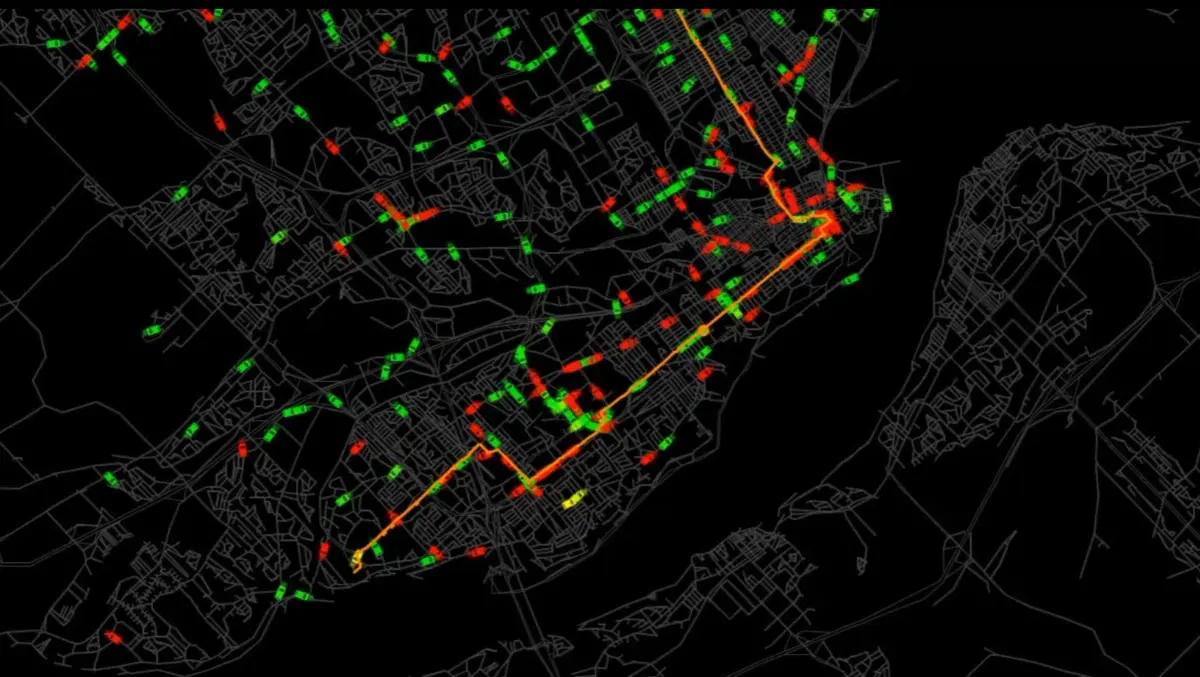
The study used Agent-Based Modelling and Simulation (ABMS) to create a virtual city environment, not dissimilar to a digital twin, with a two-dimensional map that allowed the team to analyse route-level behaviour, travel patterns, and fleet performance under tested scenarios.
"Inside of this virtual environment, it has these objectives to commute, to go to work, to go pick up kids on school - each agent has the capability of go to any place it wants on the city. It also selects which type transportation means it's going to use," said Augusto Manzolli.
From this data, the team extrapolated energy consumption based on topography, traffic tendencies, and distance while evaluating the toll on the city's electricity grid - all factors that cut close to the bone when dealing with big bus batteries in -30 degree Quebec winters.
Augusto Manzolli pointed to bus systems in Norway and northern China, real cold operations running sans gas. In his view, Canada has not succeeded in fully electric fleets because of a mix of smaller fleet sizes and charging infrastructure limitations.
A key issue is preparing a bus fleet plan for the two major seasonal changes, such as front-loading buses with larger batteries in the winter months, when heating cabs and tougher acceleration occur more frequently.
In 2023, the federal government and the City of Toronto announced a CAD $700 million investment in the Toronto Transit Commission's bus electrification project. 340 battery-electric vehicles are said to be en route by the end of this year. Once the new fleet is delivered, the TTC's fleet of 400 electric buses will make it one of the largest battery-powered public transit operators on the continent.
Even so, the TTC operates over 2,000 buses across its network, so much more infrastructure will be needed going forward, with the organisation's goal to achieve net-zero emissions by 2040.
A preceding e-bus study from November 2025, led by Moataz Mohamed, Director of McMaster University's Institute for Transportation and Logistics, found that it would cost CAD $2 billion annually, including around CAD $0.3 billion for building charging infrastructure to make total bus electrification possible within the 100-plus transit agencies in the country.
It would also require a 17 per cent increase in active buses to accommodate charging times while maintaining current service levels under a depot-charging strategy.
Augusto Manzolli's study found that 35 per cent more chargers would be needed to keep efficient service with depleted batteries in cold weather.
He said the trade-offs between charging strategies for battery-powered bus fleets mean weighing the more energy-efficient slow-charging approach against the time-saving benefits of fast charging.
"For the fast charging strategy (the peak power of the day,) you would take a kind of 20 megawatt power, which is close to a small neighbourhood's peak power drawn from the grid in the same situation. So imagine that you have a fleet, and you're going to need to have the power capability of a small neighbourhood. This can be really tough for having this power capability at a small depot for small cities," he said.
Plus, a fully electric bus fleet does not necessarily rule out 100 per cent of gas use. Augusto Manzolli is researching what his team calls the "winter paradox," in which transit agencies use fire-fueled heaters to heat the vehicle's interior.
The research is ongoing.
"Which other type of technologies we could use? A heat pump one idea. [Also], instead of only charging the buses at the depot, you can charge the buses during the operation is also other techniques that can be used to increase the driving range and not need to rely on a heater that uses our burns diesel."
Augusto Manzolli's team will continue to analyse data from cities across the nation, with maps for Ottawa and Montreal in the works.