


.webp)
Liner has launched Figure Generator on its Liner Scholar platform, adding visualisation tools to a service centred on academic research and citation support.
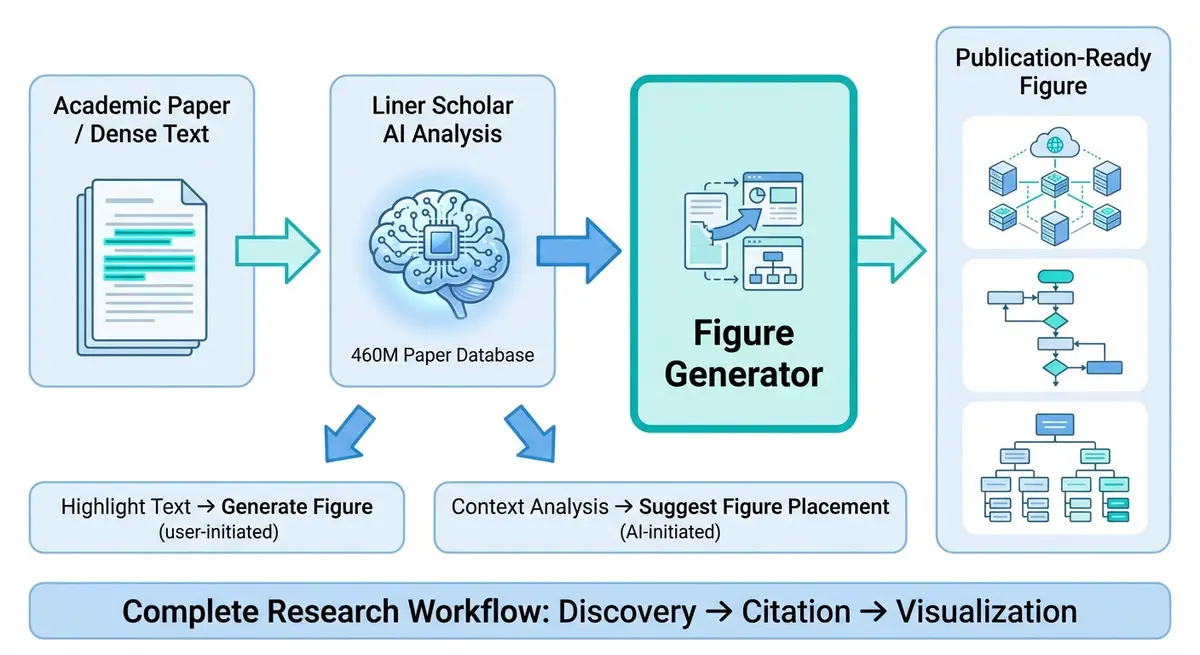
The feature lets researchers highlight a passage in an academic paper and ask Liner Chat to create a figure that explains it. It can also review a full paper and suggest where a figure may help readers better understand the material.
The launch expands Liner Scholar's role in research work beyond search and summarisation. It is aimed at fields such as artificial intelligence, biology and computer science, where diagrams and other visuals often play a central role in explaining methods, systems and relationships.
Liner Scholar is backed by a database of 460 million academic papers, which supports the new feature's analysis of selected passages and the broader context of a document.
Workflow shift
The move comes as AI tools become more common in research settings, where software is increasingly used to retrieve papers, summarise findings and help with drafting. Attention is now shifting to how researchers present and explain complex work, particularly when text alone is not enough to make a paper easy to follow.
In many academic and technical disciplines, producing figures remains largely manual. Researchers often rely on presentation or design software for first drafts, then go through several rounds of revision before a visual is suitable for publication or sharing.
Figure Generator is designed to reduce that work by producing visuals from text prompts within the same workflow used to find and cite sources. Liner says the output can illustrate process flows, system architecture, structural relationships and data correlations.
That places the product in a growing segment of AI tools seeking to handle more of the research process, from discovery to communication. While many services focus on answering questions or summarising papers, fewer aim to turn dense academic text into visuals that can be used in a manuscript, presentation or discussion draft.
Research market
Liner positions itself as an evidence-focused AI research platform, emphasising citation-backed answers and source traceability. Its users include students, educators, professionals and other knowledge workers who need to check claims and audit information.
By adding figure generation, the company is addressing a part of research work that can be time-consuming and costly, especially for users without access to specialist design support. In practice, visuals in academic papers can influence how quickly a concept is understood and how easily a study is discussed, taught or cited.
Liner has also pointed to outside recognition as it expands the platform. It was recently named No. 2 in the Education category on Fast Company's 2026 Most Innovative Companies list.
Luke Kim, Chief Executive Officer of Liner, outlined the rationale for the launch. "Researchers are often expected to communicate highly complex ideas with clarity, but the process of creating strong figures has remained unnecessarily slow and resource-intensive," Kim said. "Figure Generator extends Liner Scholar beyond search and citation support into visual explanation. No more PowerPoint. No more Illustrator. Researchers should be able to go from evidence to explanation in one workflow."
Figure Generator is now available on Liner Scholar.