

Exclusive: Sage unveils AI push to empower finance leaders
Tue, 21st Oct 2025
Sage is on a mission to reinvent the finance function.
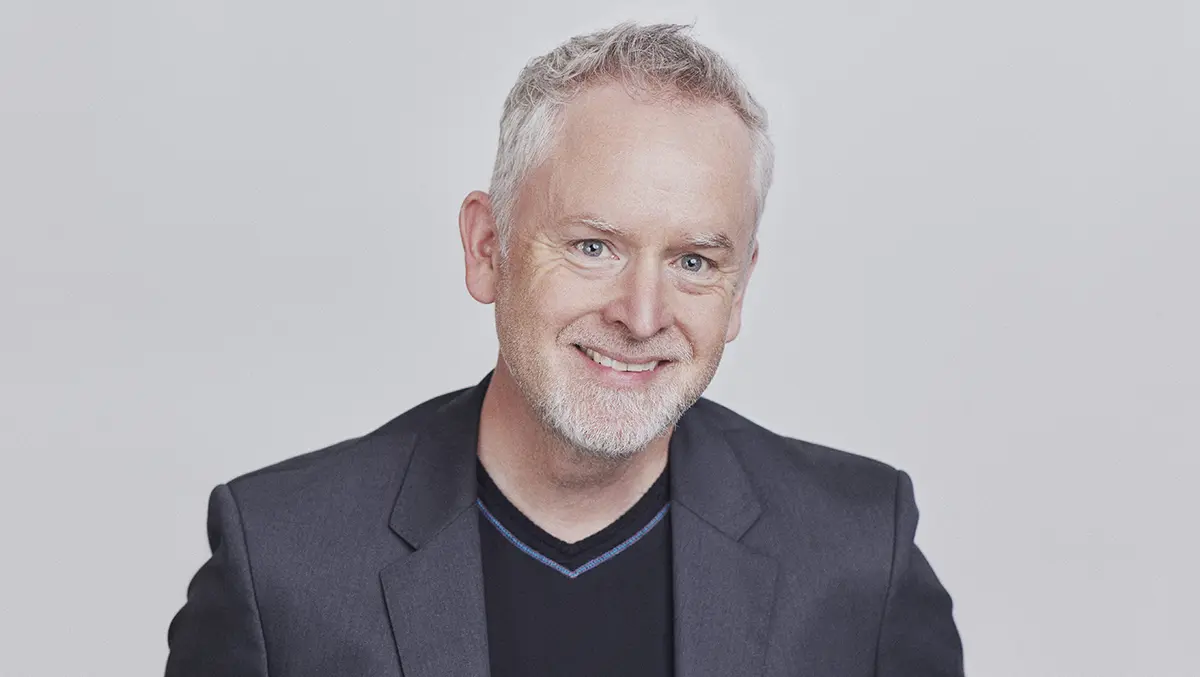
Aaron Harris, Global Chief Technology Officer at Sage believes the 40-year-old vendor is blending AI innovation with trust to empower the next generation of finance leaders.
"We're at a really exciting point," Harris said. "It's a fun time to be a CTO, scary with how fast things are moving, but really exciting."
A global platform with deep roots
Sage has long been known for its accounting and payroll software, but its reach today extends far beyond small businesses. "We're actually pretty unique in the range of customer sizes that we support," Harris explained. "In the UK, we have products for sole proprietors and landlords that own one or two properties, and that scales all the way up to larger publicly traded companies."
The company's reach spans North America, Europe, South Africa and Asia-Pacific, and its shift to the cloud is nearly complete. "We're nearly 100% SaaS now," he said. "It wasn't easy."
Harris knows that evolution first-hand. Before joining Sage, he co-founded Intacct, a pioneering cloud-based finance platform acquired by Sage in 2017. "We started the company in early 2000 – probably too early to the cloud," he laughed. "We were about two years after Salesforce."
Competing with the giants
Intacct remains central to Sage's strategy, competing directly with NetSuite. "NetSuite's our biggest competitor," Harris said. "But we serve the CFO. That's our difference. They go broad; we go deep."
That focus has driven a series of product advantages, he added: "We were first to market with multi-entity capabilities, and our dimensionality, the ability to plan and report across any dimension of the business, is something that's been very hard for competitors to replicate."
Sage's open platform means its customers can integrate with hundreds of third-party tools. "You'll find names you recognise, but also a long tail of niche solutions built for specific verticals," Harris said.
The AI evolution: from tasks to agents
At the recent Toronto Global Forum, Harris discussed "charting the productivity curve" and outlined what he calls the "three waves of AI": task-based, generative and now "agentic" AI.
"We can now hand responsibility for complete workflows over to AI," he said. "It's not just automating tasks – it's giving AI autonomy within the bounds we set for it."
Those agentic capabilities are already appearing in Sage's products. Accounts payable, reconciliation and financial close are early areas of focus. "Without agents, AI just makes workflows faster," he said. "With agents, the workflow itself changes – your job changes. The AI is doing accounts payable for you."
Sage will reveal more at its upcoming partner conference. "We already have some agents live with customers," Harris confirmed. "We'll be making an announcement soon about templates and best practices."
Building trust in automation
For Harris, the biggest challenge is not the technology itself but the human element. "Trust is the biggest barrier to adopting AI," he said. "Imagine you're an accountant being asked to hand your work to an AI agent. You've got to trust that it'll work – because if it doesn't, you're still accountable."
That trust, he explained, has multiple dimensions: reliability, control, transparency, data privacy and ethics. "Customers want to know their data isn't going to leak," he said. "They want to know we're guided by solid principles."
And brand reputation plays a crucial role. "It's kind of ironic," Harris admitted. "When I joined, Sage wasn't seen as an innovation leader. But now, that long-standing reputation for professionalism is actually a big advantage. Customers see us as the adult in the room."
From accounting to assurance
Harris sees a transformation underway in finance departments. "The CFO of the past was dominated by cycles – month-end closes, payroll runs, audits," he said. "Those things are non-negotiable but they don't add a ton of value."
By automating these routines, Sage aims to free finance teams for more strategic work. "We've put a lot of investment into what we call continuous assurance – AI that builds confidence in data reliability," he said. "That leads to continuous insights. When you give CFOs time back, you have to empower them to use it for higher-value work."
That shift has wider implications for business leadership. "CFOs are being asked to do more," Harris explained. "They're becoming drivers of growth, often leading digital transformation. There's even expanding regulation – things like mandatory carbon-emission reporting in Europe. So their remit is broader than ever."
A new mission for modern CFOs
This evolution is at the heart of Sage's new brand mission, "High-Performance Finance Software," launched globally in June. The initiative combines AI-powered tools, upskilling through a new High-Performance Academy, and a peer network for finance leaders.
"Today's CFOs aren't just financial managers; they're catalysts of growth," said Mark Hickman, Sage's Managing Director for North America, in the launch announcement. "We're providing the advanced technology, executive-level training and dynamic peer network that will empower them to lead boldly from the front."
The initiative follows new research showing that 90% of CFOs say their roles have expanded significantly, and nearly three-quarters prioritise progression over pay. Yet most (85%) admit they need better tools, and only a third currently lead digital transformation efforts.
To bridge that gap, Sage has partnered with leadership network GrowCFO to deliver a CPE-accredited program via Sage University. "High-performance leadership isn't just about what you know, it's a whole mindset," said GrowCFO CEO Dan Wells. "It's about how you show up, how you enable your peers, and how you lead your teams to amazing outcomes."
The road ahead
Sage's embedded AI assistant, Sage Copilot, is already helping finance teams automate processes and uncover insights. "We've transformed the way the finance department runs," said Kathleen Ruiz, CFO of LA Opera House, in the launch statement. "Now we spend less time on the things none of us like to do and more time drawing insights. This is what high performance looks like to me."
For Harris, that is precisely the point. "We've moved from automating accounting workflows to empowering the high-performance CFO," he said. "And we're just getting started."