

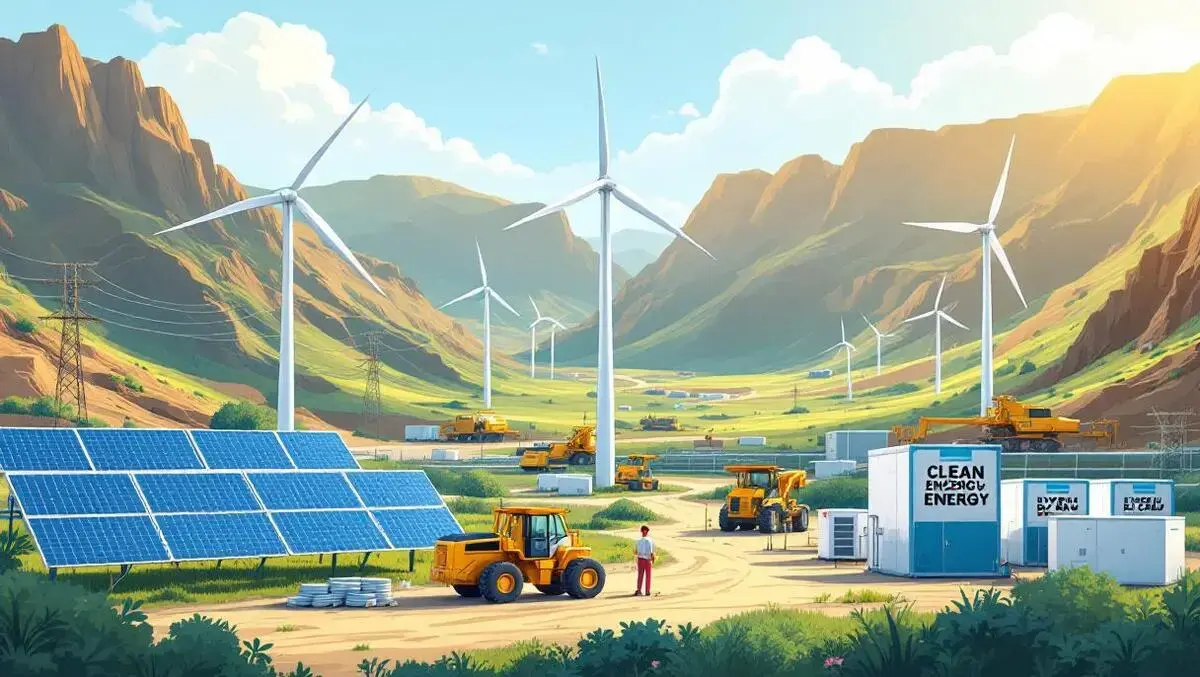
CleanDesign raises USD $20 million for hybrid energy rollout
Thu, 30th Apr 2026.webp)
CleanDesign has raised USD $20 million in a growth investment led by Edison Partners. The funding will support a broader rollout of its hybrid energy technology across oil, gas and mining operations in North America.
The Toronto-based company sells Hybrid Energy Management Systems that work with existing industrial power setups. Its platform combines battery storage, software and AI to manage diesel-based systems more efficiently, with the aim of cutting fuel use, reducing emissions and improving equipment uptime.
The investment comes as industrial operators face pressure to lower costs and meet tighter environmental standards without replacing established infrastructure. Demand has been rising from oil and gas customers as well as mining groups, with mining showing particular momentum.
Its systems are already deployed with drilling service providers and at remote mining sites in regions including Mexico and Nunavut in Canada's Arctic Circle. In those locations, diesel transport costs can push prices as high as USD $10 a gallon, making even modest efficiency gains financially significant.
CleanDesign said its technology can cut diesel consumption by about 10 to 15 per cent, while some customers have seen emissions reductions of up to 20 per cent. The software also collects 60,000 data points a second from each unit to adjust power use in real time.
Chief Executive Officer Mark Lerohl said recent commercial progress had strengthened the case for expansion.
"In the past year, we've seen increasingly strong traction, especially in mining, alongside clear proof of unit economics in the field. Customers are realizing improved uptime and up to 20 percent reductions in emissions, and cost savings that go straight to the bottom line all without disrupting their existing operations," Lerohl said.
He pointed in particular to remote mining operations, where diesel remains central to site operations.
"In remote mining, operators rely heavily on diesel to keep sites running," Lerohl said.
"We're helping reduce that dependence while improving reliability in environments where alternatives have been limited," he said.
Board seats
As part of the deal, Edison Partners Principal Steve Zieja and General Partner Gregg Michaelson will join CleanDesign's board of directors. Edison described the company as part of its broader interest in digital infrastructure investments.
Zieja said the appeal lies in adding a software layer to long-established industrial systems rather than requiring customers to replace equipment.
"This is a segment of critical infrastructure that has seen limited software innovation," said Steve Zieja, Principal at Edison Partners, who led the investment alongside Gregg Michaelson. "CleanDesign layers intelligent, hardware-agnostic software onto existing infrastructure, which means operators get real performance gains without replacing what they have. Mark and the team have built something genuinely differentiated here and earned real trust in environments where that's hard to do. There's a massive installed base, and they're well positioned to go after it."
Expansion plans
CleanDesign will use the new capital to increase deployment of its hEMS units, expand into more mining and remote energy applications, and continue developing products including Highline. The newer system is intended to help industrial operations connect to grid power while using software to manage energy consumption.
The deal adds institutional backing to a business targeting sectors where electrification can be difficult because of location, operating conditions and existing diesel dependence. In remote industrial settings, companies have often sought incremental efficiency improvements before committing to larger changes in energy supply.
Edison Partners focuses on growth-stage technology businesses. CleanDesign joins a portfolio that includes 120Water, Budderfly, Overhaul, RapidDeploy and Seismos. The investor manages USD $2.2 billion in assets.
For CleanDesign, the financing provides new capital as heavy industry looks for practical ways to cut fuel costs and emissions while keeping existing operations running. Its technology is designed to deliver those savings without disrupting customers' existing infrastructure.