

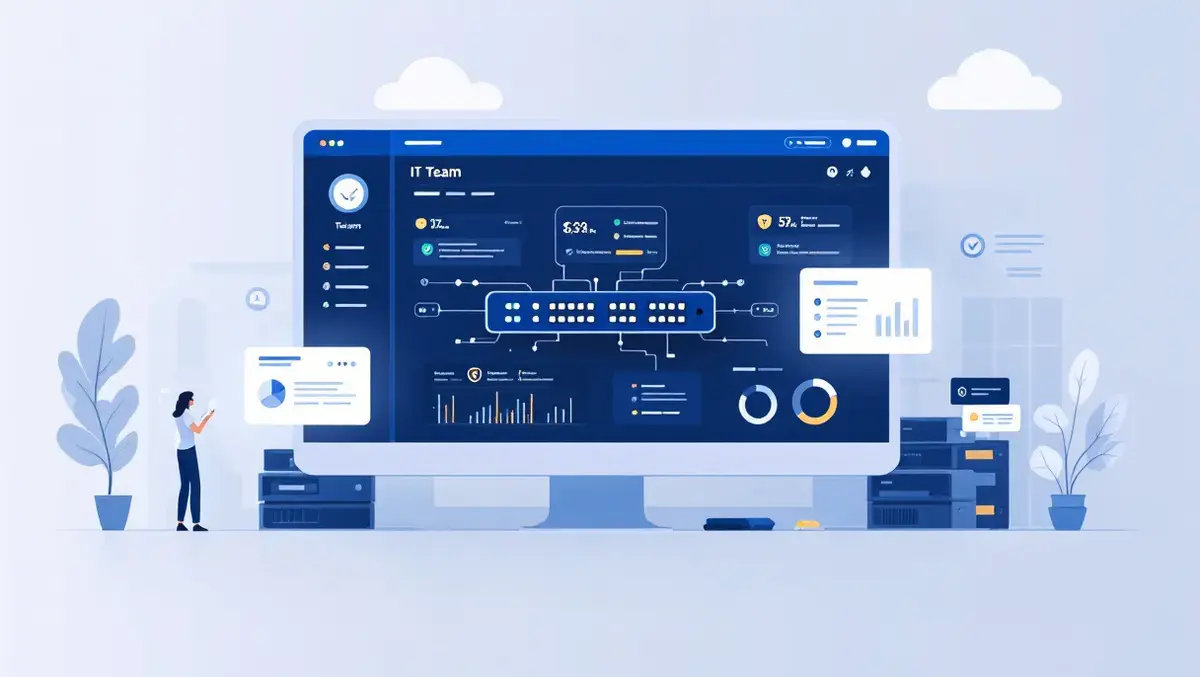
Auvik launches automation & vulnerability monitoring tools
Fri, 13th Nov 2026 (Today)
Auvik has launched the Auvik Automation Framework and a Common Vulnerabilities and Exposures Monitoring Agent, expanding its IT management platform for customers handling network operations and security checks.
The products are aimed at IT teams and managed service providers overseeing networks across multiple vendors and environments, where configuration changes and vulnerability checks are often done manually. The Automation Framework lets teams create and run jobs across groups of network devices, while the CVE Monitoring Agent checks published vulnerabilities against customer devices using sources including the National Vulnerability Database and vendor advisories.
The launch builds on a broader set of AI-based tools Auvik has rolled out this year. These include the Troubleshooting Agent, Remote Terminal Agent, Remote Command Agent, Alert Insights Agent and Lifecycle Management Agent, all of which are now generally available.
Auvik said its platform draws on 15 years of network data, including 3.5 billion CLI commands, 350 million device configurations and 12 million distinct devices. That information helps technicians investigate faults, identify likely root causes and generate commands for specific devices, according to the company.
Security focus
The CVE Monitoring Agent comes as the volume of disclosed vulnerabilities continues to rise. Auvik said CVEs identified in 2026 are on track to double the 2025 total, adding to the pressure on IT teams to determine which systems are affected.
That process can involve checking several databases and vendor notices against device inventories, particularly in mixed estates with equipment from multiple suppliers. The new agent is designed to automate those checks and adds to Auvik's Asset Intelligence offering, which already includes Device Lifecycle Monitoring.
Auvik also highlighted alert management as another area where automation can reduce workload. Its Alert Insights Agent identifies patterns in alert histories and recommends settings that can reduce recurring alert noise by up to 80%, according to the company.
Automation push
The Automation Framework is intended to reduce the need for technicians to make changes one device at a time. Teams can define commands, choose device groups and run jobs immediately or on a schedule, allowing multiple network changes to be handled as a single task.
That approach is likely to appeal to service providers and internal IT departments managing large fleets of switches, routers and security devices. In those environments, repetitive changes can consume staff time and increase the risk of inconsistency if carried out manually.
Doug Murray, Chief Executive Officer of Auvik, said the releases reflect a broader shift in how the company is building its platform. "Autonomous IT isn't something off in the distance. It's something we have built pervasively into the platform," Murray said.
He added: "Our mission has always been to simplify the day in the life of IT teams so that they can spend less time on routine work. This points toward a future where networks can optimize and heal themselves, freeing IT teams to focus on the challenges that matter most."
Platform growth
Auvik said it now manages one million network devices and three million SaaS applications across more than 100,000 networks, while providing monitoring services for 12 million devices. The company positions its software as a way for IT teams to manage networks, endpoints, security devices and SaaS applications from a single platform.
Its troubleshooting tools are designed to work from operational data such as alert history, configuration history, network topology and syslog records. Auvik said the Troubleshooting Agent surfaces a likely root cause, assigns a confidence score and recommends diagnostic commands tailored to the device being investigated.
For direct-access tasks, technicians can use natural language through the Remote Terminal Agent for network devices and the Remote Command Agent for servers and workstations, according to Auvik. The company said this reduces the need to search through product documentation when carrying out routine operational work.
The latest additions are now available to customers alongside the previously launched agents and lifecycle monitoring tools. Auvik said the Automation Framework is designed to keep people in control of automated actions across the network.